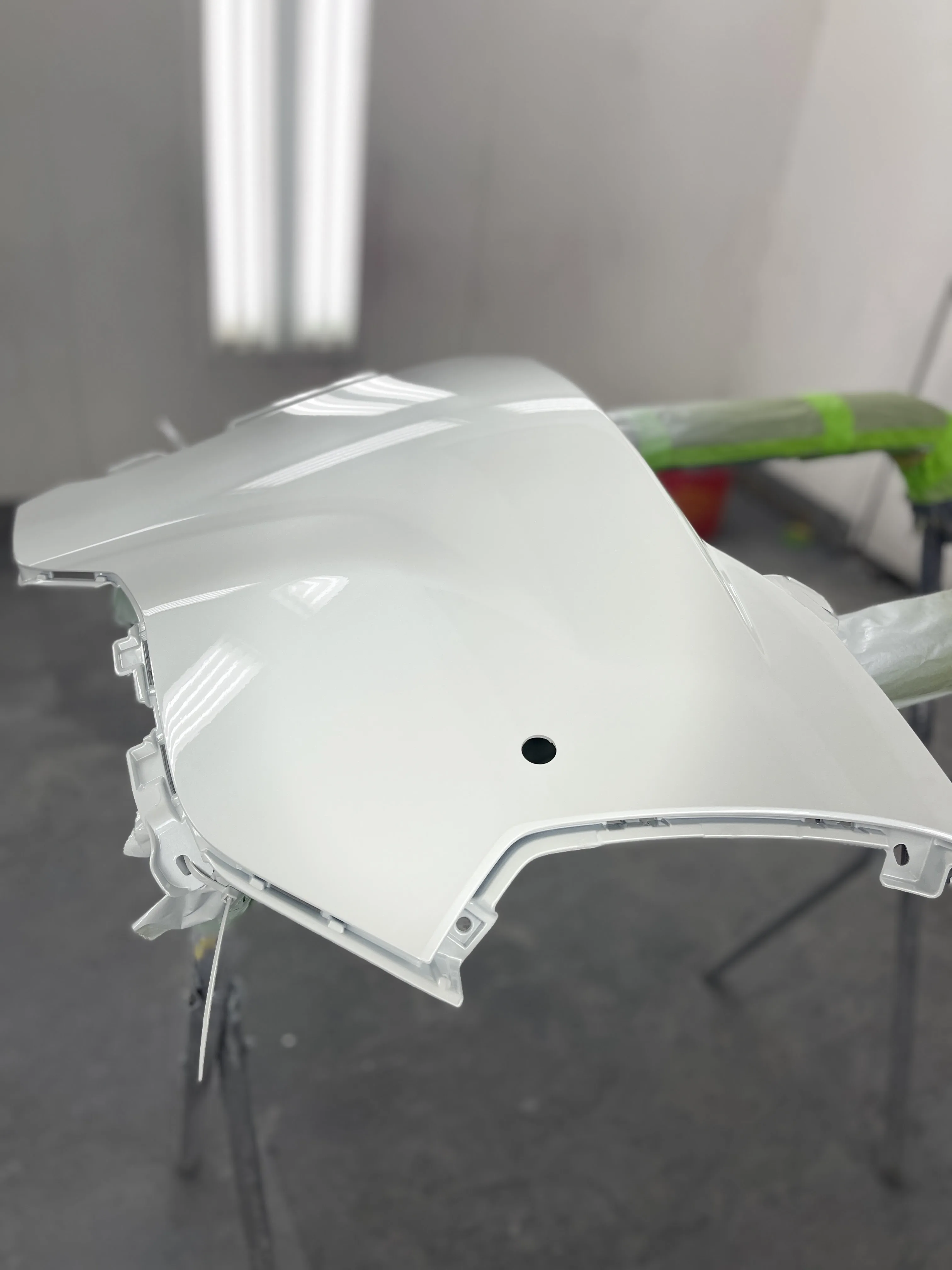
A vehicle's paint code identifies a formula family, not a guaranteed spray-and-done match. The painter may need to compare variants, prepare test samples, adjust the formula, evaluate texture and gloss, and blend into an adjacent area when the repair plan calls for it. Judge the result in more than one lighting condition and from more than one angle.
The Challenge of Matching Paint
Matching automotive paint is far more complex than most people realize. Your car's paint is not a single solid color -- it is a multi-layer system consisting of primer, base coat (the color), and clear coat. Modern automotive paints also contain metallic flakes, pearl pigments, and other additives that change how the color appears under different lighting conditions and viewing angles.
On top of that, your car's original paint has been exposed to years of sun, weather, and environmental exposure. The color you see today is not the same as it was when the car left the factory. A proper color match needs to match your car's paint as it is now, not as it was when it was new. (In the Inland Empire, sun and UV damage speed that fading up dramatically.)
How Paint Codes Work
Every vehicle has a paint code -- a specific identifier for the color formula used at the factory. This code is usually found on a sticker in the driver's door jamb, under the hood, or in the trunk. Paint manufacturers use this code as a starting point, providing a base formula that should be close to the original color.
However, a paint code is just a starting point. Manufacturing variations mean that even brand-new cars of the same color code can look slightly different depending on when they were built, which paint batch was used, and even which factory produced the vehicle. After years of sun exposure, the gap between the code formula and your actual color widens further.
The Tinting Process
A painter starts with the vehicle's paint code and available formula information, then evaluates the actual finish on the car. Depending on the color, variant, age, and repair area, that can include test samples and small formula adjustments before the vehicle is sprayed.
Metallic and pearl finishes add another variable because flake or pigment orientation changes how light returns to the viewer. Application technique, air pressure, distance, overlap, and the surface below the color can affect the appearance.
At Drive Auto Body, the steps used depend on the vehicle and approved repair plan. We do not promise that a paint code alone guarantees an invisible result.
What Is Blending?
Even with a perfect color match, if you paint only the damaged panel and leave the adjacent panels untouched, the boundary between old paint and new paint can be visible. This is because paint appearance is affected by texture, gloss level, and application technique, not just color.
Blending is the technique of gradually feathering the new paint into the adjacent panels so there is no hard line where new meets old. The painter sprays the full color on the repaired panel, then extends a lighter application onto the neighboring panels, tapering off so the transition is invisible.
Blending is one available refinishing approach, but it is not automatically required on every color or repair. The appropriate blend area depends on the color, panel relationship, finish condition, repair procedure, customer authorization, and insurer decision when a claim is involved. Ask the shop to explain what the estimate includes.
Signs of a Bad Paint Job
Knowing what to look for can help you evaluate a repair before accepting your vehicle back:
- Color mismatch visible in daylight -- The repaired panel looks noticeably different from adjacent panels, especially in direct sunlight.
- Orange peel texture -- The paint surface has a bumpy texture like the skin of an orange, instead of being smooth and reflective.
- Dust or debris in the clear coat -- Particles trapped under the clear coat indicate the paint booth was not properly cleaned.
- Runs or sags -- Areas where the paint pooled and dripped, creating visible ridges or waves.
- Tape lines -- Hard edges where masking tape was placed, visible as a ridge between painted and unpainted areas.
- Metallic flake orientation -- On metallic colors, the flake may look different (lighter or darker) depending on viewing angle if the application technique did not match the factory finish.
Why It Matters for Your Vehicle's Value
A noticeable mismatch can draw attention to a repaired area and affect how an owner, buyer, dealer, or appraiser views the vehicle. The actual effect on resale value varies with the vehicle, repair history, market, documentation, and quality of the completed work.
A well-planned refinish aims for a consistent appearance across the repair area while preserving appropriate records of the work. For the cost variables behind refinishing, see our Inland Empire collision repair cost guide.
Our Approach to Color Matching
At Drive Auto Body, the paint process is selected for the specific vehicle and repair. Depending on the job, that may include paint-code and formula lookup, variant evaluation, test samples, tinting, blending, and visual checks. The approved repair plan determines which steps are required for each paint and refinishing job.
If you have concerns about a previous repair's paint quality, or if you want to understand the next step for a new repair, bring your vehicle to our Hemet shop for a free preliminary visual estimate. If detailed repair planning requires diagnostics, disassembly, or other paid work, we explain it and obtain authorization first.
Need Collision Repair?
You open the claim. After that we handle the repair side: the write-up, the adjuster, supplements, and direct billing once the work is authorized.
Get Your Free Estimate arrow_forward Start an Insurance Claim arrow_forward