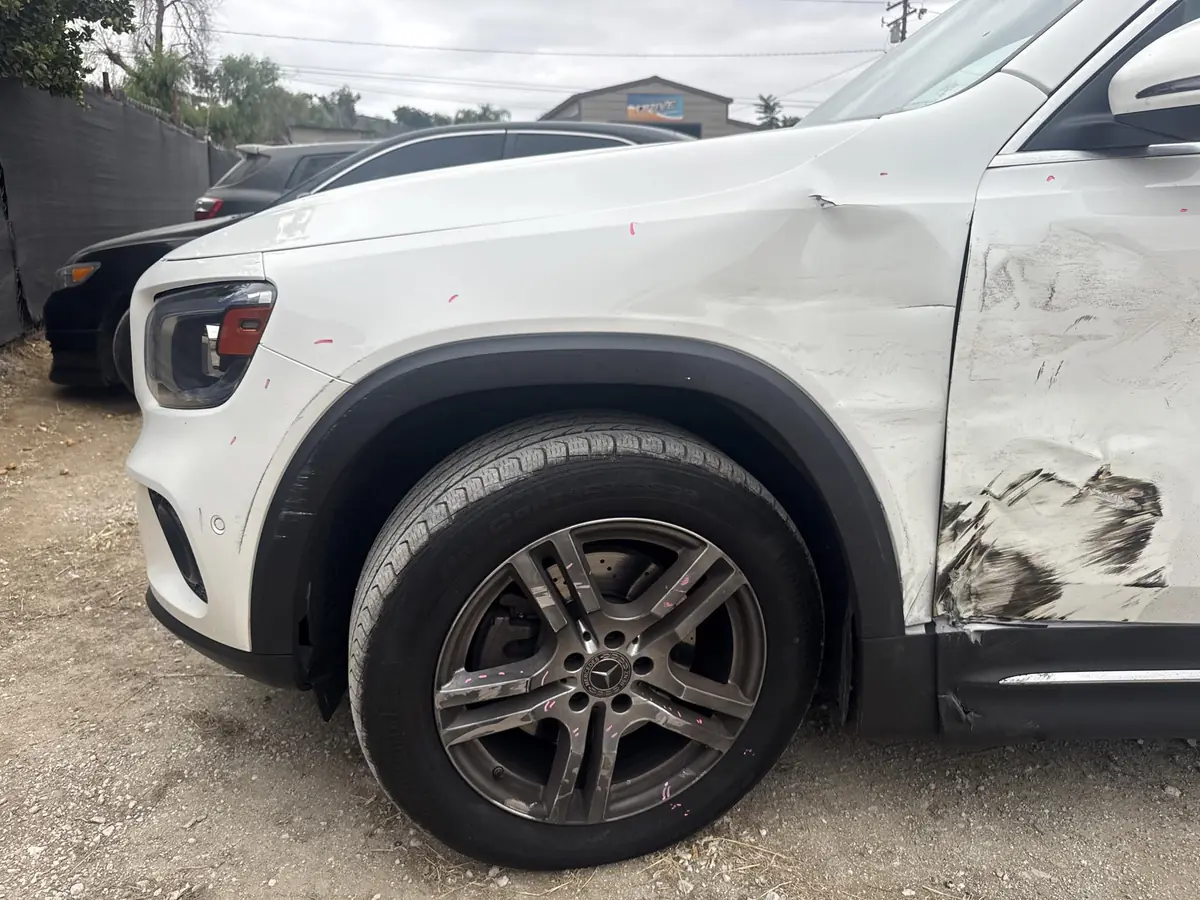
Have damage looked at soon if it breaks the paint down to bare metal, cracks or loosens a bumper cover, leaves trim or a liner flapping, or sits near a parking sensor, radar unit, or camera; moisture, vibration, heat, and sun tend to make those worse. Light scuffs in the clear coat and small dents with unbroken paint are usually cosmetic and can often wait.
Why Small Damage Doesn't Always Stay Small
Your car's finish works as a set of layers. Primer, color, and clear coat seal the metal or plastic underneath from moisture, heat, sun, and road grime. Once those layers break, the damage has a way in.
Inland Empire weather adds to that. Winter rain and morning dew give exposed steel the moisture it needs to rust, and summer heat and sun can make a lifted clear-coat edge peel further. “Small” describes the size of the mark, not what it can turn into.
Five Kinds of Small Damage
Scratches
A common rule of thumb: run a fingernail across it. If your nail glides over, the scratch may be only in the clear coat. If it catches, it probably goes deeper and can't simply be polished away; on steel panels, rust can start along the line.
Rock chips
Freeway miles on CA-91, I-15, and I-215 chip the hood's front edge, the bumper, and the mirrors. A chip that shows bare metal on a steel panel can corrode, and corrosion can creep under the surrounding paint. Touch-up can protect a small chip, but it is not the same as a refinish. Windshield chips belong with a glass provider; Drive Auto Body does not perform stand-alone glass repair.
Small dents
A shallow dent with unbroken paint, away from a panel edge or body line, is usually cosmetic and won't rust while the paint stays intact. Dents with cracked paint, dents on door edges, and creases along body lines are more likely to need attention.
Cracked bumper covers
Most bumper covers are plastic, so they don't rust, but cracks tend to grow with vibration and temperature swings, and mounting tabs can break. A crack is also a reason to check what sits behind the cover: brackets, absorbers, and on many newer cars, sensors.
Loose trim and liners
A molding with a lifted edge, a loose wheel-well liner, or a hanging splash shield can catch air at freeway speed, rub a tire, or come off. Re-securing these parts often takes new clips or retainers, not tape.
Damage Near Sensors and Cameras
Many newer vehicles hide driver-assistance hardware behind paint and plastic: parking sensors in the bumpers, radar behind the front emblem or lower grille, blind-spot sensors in the rear bumper corners, and cameras in the grille, mirrors, or tailgate. A small crack, dent, or poorly fitting cover in one of these areas can affect how a sensor sits or reads.
Don't assume a system is fine just because no warning light is on. Repairs in these areas may call for a scan or calibration under the manufacturer's procedures, which a shop performs or arranges through a qualified provider.
When It's Usually Fine to Wait
Waiting is a reasonable choice for damage that stays on the surface:
- Light scuffs that don't catch a fingernail.
- Small dents with unbroken paint, away from edges, body lines, and sensors.
- Chips that haven't reached bare metal. Keep them clean and consider touch-up.
- Scuffs on textured plastic trim that is still secure.
Take a dated photo so you can tell later whether anything changed. One caution: if the damage came from a collision you might claim, policies usually expect prompt notice, so check with your insurer about timing.
When Not to Wait
- Bare metal, rust spots, or bubbling paint near the damage.
- Clear coat peeling or flaking around a chip or scratch.
- A cracked bumper cover, especially one that has shifted or no longer lines up.
- Damage near parking sensors, radar, or cameras, or a new warning message.
- Trim, a liner, or a bumper edge that moves at speed or rubs a tire.
- A door, hood, or trunk that closes differently than it used to.
That last sign can point to more than cosmetic damage; see our guide to signs a car may need a structural inspection.
Check Your Car This Weekend
Pick a dry day with good light:
- Wash and dry the car out of direct sun so marks are easy to see.
- Walk around slowly, then crouch to see the lower bumper edges and rocker panels.
- Run a fingernail across each scratch.
- Check for chips on the hood's front edge, the bumper, and the mirrors, and note any bare metal or rust.
- Press gently on trim and bumper edges with the car off, and look for liners rubbing the tires.
- Look at sensor areas: the front emblem, bumper sensors, rear corners, and camera lenses.
- Open and close every door, the hood, and the trunk or hatch.
- Photograph each item with one wide shot and one close-up.
Then sort what you found into things to watch and things to have looked at. Our paint and refinishing page covers chips, scratches, and peeling clear coat, and our collision repair page covers bumper, sensor, and panel damage.
Request a Preliminary Visual Estimate
If your weekend check turned something up, call (951) 268-3006, send photos from your phone through our free online estimate, or use the form below. A preliminary visual estimate is free, and we will explain what can be judged from photos and what needs an in-person look.
About this guide. Drive Auto Body is a family-owned, independent collision repair and paint shop in Riverside, California, serving nearby Inland Empire communities. This article is general consumer information, not a repair diagnosis, coverage decision, legal opinion, or guarantee of price or timing. Vehicle needs, repair requirements, parts availability, and insurer decisions vary. Last reviewed January 1, 2026.